Explore door access control systems in Pakistan by AKI Groups. Smart and secure access solutions for offices, commercial buildings and facilities.
Deciding who can enter a room should be straightforward for authorised users and manageable for the people responsible for the building. Door access control systems help organise entry to selected doors using credentials and configured permissions. AKI Groups welcomes enquiries for access control requirements alongside its wider building security solutions. Share your door schedule, site layout and intended access rules to discuss suitable equipment and the scope of your project.
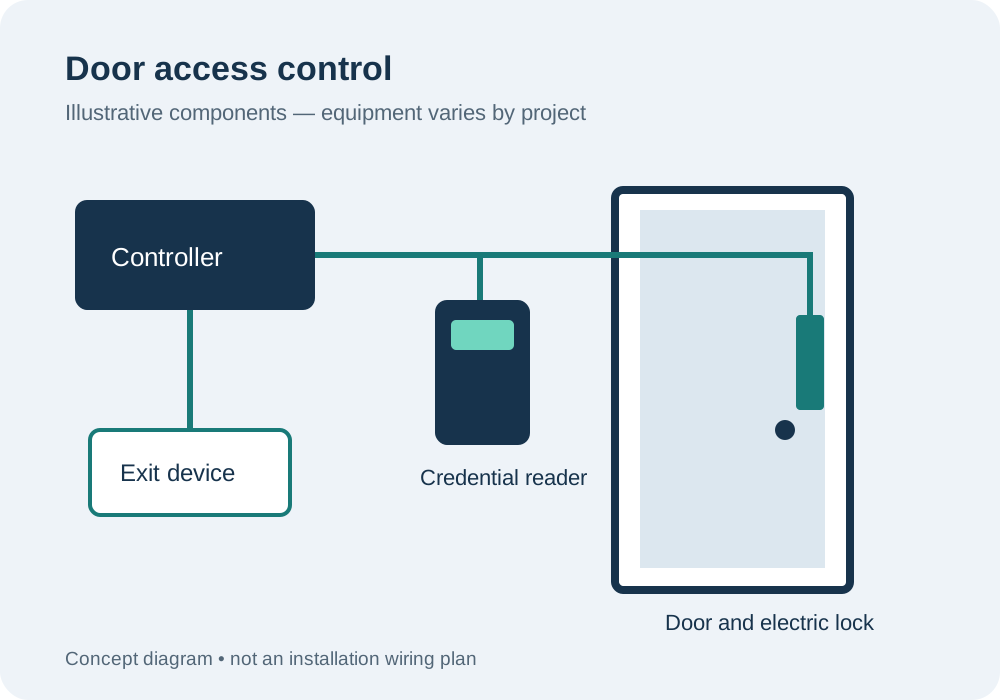
A door access system combines a way to identify the user, a controller that checks permission and compatible locking hardware. The right arrangement depends on the door construction, number of users, operating hours and how people must leave the area. This page focuses on controlled door entry; CCTV provides a separate monitoring function, while the broader security solutions page covers related building requirements.
Solution Scope
Systems and Product Requirements
Card and key fob readers: convenient credentials for staff entry, subject to reader and credential compatibility
PIN keypads: code-based entry where suitable; code management and sharing policies need consideration
Biometric readers: an option where supported and appropriate, with privacy and enrolment requirements reviewed before selection
Access controllers: manage door permissions and communicate with compatible readers and management software
Electric strikes or electromagnetic locks: hardware selected around door construction, operating requirements and emergency exit arrangements
Exit devices, door contacts and power equipment: components selected to support the complete door arrangement
Applications and Project Context
Offices may need staff-only entry beyond reception. Commercial buildings may separate tenant areas from shared facilities, while warehouses may restrict entry to stores or administration rooms. Technical rooms can require a smaller authorised user group. Each door should have a clear purpose, an agreed user policy and a suitable means of exit.
Industries
Where These Requirements Apply
Offices and commercial buildings
Warehouses and managed facilities
Educational and institutional premises
Technical rooms and staff-only areas
Selection Factors
Information to Review Before Selection
Door material, frame, opening direction and existing hardware
Number of controlled doors, users and credential types
Standalone operation or centrally managed access permissions
Visitor access, staff changes and credential removal procedures
Power supply, backup requirements and behaviour during a power failure
Emergency exit requirements and any specified fire alarm interfaces
Network availability, software permissions and event retention requirements
Discuss Your Project With AKI Groups
For a useful quotation, provide your project location, door count, photographs or a door schedule, and the preferred entry method. Mention existing readers or locks, required access schedules and whether software, installation or integration work needs to be included. AKI Groups can review the enquiry and clarify equipment availability and the proposed supply or coordination scope before any commitment is made.
Manage entry permissions for designated doors and users
Reduce reliance on shared mechanical keys where an electronic system is suitable
Set access schedules where supported by the selected equipment
Review entry events where the proposed system includes logging
Plan additional doors and users around controller and software capacity
FAQs
Common Questions
How do I choose door access control systems in Pakistan?
Start with the doors you need to control, the number of users and the preferred credential method. Review door hardware, power, management needs and emergency exit requirements before selecting equipment.
What is the difference between standalone and networked access control?
A standalone arrangement typically manages access locally at a door or device. A networked arrangement can support central administration across compatible controllers. Available management and reporting features depend on the selected equipment and software.
Can access control work with existing doors?
Often an existing door can be assessed for suitable hardware, but compatibility is not automatic. Door material, frame condition, lock type and exit requirements should be checked before confirming the installation scope.
What happens during a power failure?
The result depends on the lock type, wiring and backup power arrangement. The required behaviour must be specified for each door, with emergency exit needs reviewed by qualified project professionals.
Can a door access system connect to CCTV or fire alarms?
Integration may be possible where the equipment and design support it. Confirm the specific interface, required behaviour and testing responsibilities before including integration in the project scope.
Are biometric readers required?
No. Cards, key fobs and PINs may suit many applications. Biometric credentials are an option to assess against the equipment capabilities, user needs and privacy requirements.
What affects the price of a door access control system?
Door quantities, readers, locking hardware, controllers, software, power arrangements, cabling and installation scope influence the quotation. Share a door schedule to compare equipment and services on a consistent basis.
Discuss Your Door Access Control Systems in Pakistan Requirement
Share your project location, drawings, equipment schedule, and intended scope. Contact AKI Groups to discuss selection, sourcing, and coordination needs for your project.
An access reader is only one part of a controlled doorway. The enquiry should identify the door construction, frame, locking arrangement, opening direction and intended user journey. A retrofit in an occupied office presents different constraints from a new entrance where cabling and power can be coordinated before finishes are installed. Provide photographs and a door schedule so these differences are visible during review.
Explain how staff, visitors and deliveries should move through the opening. Record who grants access, who changes permissions and who responds when a credential fails. These operational decisions affect the proposed management arrangement and help avoid buying equipment that fits the doorway physically but does not fit the organisation's daily working practices.
Ask the responsible designer to coordinate emergency release and escape requirements with the building's fire strategy. Access control must be assessed as part of the complete door and building arrangement. Confirm the equipment, interfaces, installation work and acceptance checks in the written scope rather than assuming a reader quotation includes every component.