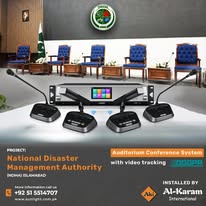
NDMA Project
A public-sector disaster management project profile listed by AKI Groups, with detailed client evidence, year, location, and approved images marked for confirmation before publication.
Explore selected AKI Groups project experience across energy, telecom, renewable power, infrastructure, public sector, and technical delivery.
A public-sector disaster management project profile listed by AKI Groups, with detailed client evidence, year, location, and approved images marked for confirmation before publication.

A telecom-sector project profile listed by AKI Groups, prepared with safe wording until client authorization, location, year, and approved project images are available.

A renewable energy project profile listed by AKI Groups, focused on solar planning, power solution coordination, and sustainable energy support with unverified fields clearly marked.
Project Experience
Our project experience reflects the type of work clients often need: clear coordination, reliable products, technical documentation, site execution support, and communication that keeps the work moving.
Energy and infrastructure support
Telecom and public-sector coordination
Renewable and technical project delivery
The projects section brings together the NDMA, ZONG and Solar Energy Project references published on the AKI Groups website. These entries provide a route for asking about the named reference and the supporting information available. They should not be treated as complete, independently verified case studies where dates, scope, permissions or outcomes have not been established.
A useful reference enquiry identifies what the buyer needs to confirm. The question may concern a company's role, a supplied equipment package, an accepted system or permission to share material. State that purpose clearly so the response can address the actual evidence requirement instead of a general request for project information.
The NDMA entry is a published public-sector reference. Its associated visual material does not, on its own, establish a precise contract identity, approved scope or equipment configuration. A buyer using the reference in a formal review should ask for the approved information relevant to its purpose and distinguish a promotional description from a verified project record.
If the enquiry concerns a new institutional or conference-related requirement, prepare that brief independently. Describe the spaces, users and system functions needed for the new project. The earlier reference can explain why a question was raised, but it should not be used to assume the right equipment or professional scope for another site.
The ZONG entry relates to a telecom-sector reference on the website. Media associated with the entry includes fire detection and suppression wording, but detailed project identity and delivered scope need their own supporting records. Do not infer supplied models, capacity, installation responsibility or acceptance from a graphic or a familiar client name.
For a formal comparison, identify the activity that matters to your review. A request to confirm product supply differs from a request to confirm specialist installation or a measurable operating result. Ask for the appropriate evidence for that activity and keep any remaining gaps visible rather than filling them through assumptions about telecom projects.
The solar entry provides a renewable-energy reference for further discussion. Visible panels or a rooftop photograph cannot establish installed capacity, generation, savings or the contribution of a particular supplier. Those statements need evidence tied to the actual project and, where performance is discussed, the basis on which the result was measured.
A new solar enquiry needs its own site and electricity-use information and a clear statement of purpose. Design, equipment supply, installation and operation are distinct responsibilities. Use the reference to begin an appropriately focused conversation, while keeping the proposed new scope separate from claims about a project whose detailed records have not yet been confirmed.
A useful project record identifies the assignment, the relevant period and location, the agreed work and the parties responsible for that work. The supporting documents should address the question the reviewer is trying to answer. An equipment list, a delivery record and an acceptance document can each be relevant without proving the same thing.
Keep the scope visible when comparing experience. A business that supplied selected equipment should not automatically be described as responsible for the full design and construction of the project. Where several contractors contributed, distinguish their activities and ask for the approved description that relates to the company being assessed.
A completion statement should relate to an identifiable scope and appropriate supporting evidence. Delivery of equipment, completion of site work and acceptance for operation can be different events. A reference page should not merge them into an unsupported claim simply to make a project description sound more complete.
Measurable results also need their own basis. Cost savings, energy output, capacity, operating improvements and similar figures should be linked to records explaining what was measured and over what period. If those records are not available, ask for clarification and leave the figure out of a public or formal claim until it can be supported.
Project photographs and client references can be valuable context, but publication and reuse require appropriate consideration of ownership and permission. Seeing an image on a public website does not establish that it can be copied into another tender, advertisement or presentation without further confirmation.
Explain the intended use when requesting project material. A private supplier review and a public marketing document are different contexts. Ask which records can be shared and whether a client name, logo or image can be reproduced for that purpose. Keeping the permission question separate from the technical evidence review helps avoid unsupported assumptions about both.
When a project reference seems relevant, describe the particular similarity you want to explore. It might concern an equipment category, coordination issue or type of facility. A specific question is more useful than assuming that two projects with the same sector label require identical products or services.
Prepare the new brief with its own location, drawings, specification and responsibilities. Ask the relevant professionals to review the actual conditions rather than adopt a configuration inferred from a previous image. The reference supports a discussion of experience; it does not replace the design, product selection or commercial scope needed for the new assignment.
Name the reference and explain what evidence you need. Include your organisation, the purpose of the review and any formal document requirement. If you also need a quotation for new work, keep that request distinct and identify the relevant product or service area.
The next step should be confirmation of the approved information available and the questions still requiring review. This section retains the published references while avoiding invented dates, quantities, values, results or client endorsements. It provides a clear route for a more detailed project conversation based on actual supporting records.