Explore heat detectors in Pakistan for building fire alarm systems. Discuss detector type, panel compatibility and project quotations with AKI Groups.
A heat detector responds to temperature conditions rather than airborne smoke. Choosing one starts with the room environment and the building fire detection design. AKI Groups accepts heat detector enquiries in Pakistan, supported by heat detector entries in its hosted Eaton fire systems catalogue. Send the detector schedule, existing panel reference and room conditions to request a compatible product proposal. Heat detection should be selected for a defined purpose; it is not an automatic substitute for smoke detection.
This page addresses temperature-sensing fire alarm devices. The wider Fire & Life Safety Systems page covers the complete protection scope, while Fire Alarm Control Panels covers control equipment. The AKI-hosted Eaton Fire and Voice Alarm Systems catalogue, dated April 2018, includes rate-of-rise and fixed-heat detectors on page 75. That establishes a product-category reference, but current supply and the proposed replacement part still need confirmation. A detector body that fits a base physically may not be electrically compatible.
Solution Scope
Systems and Product Requirements
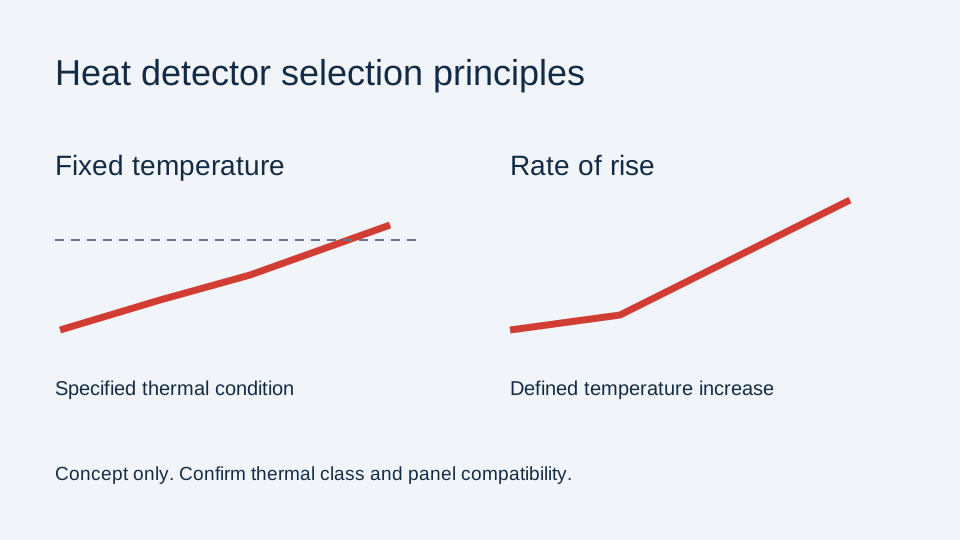
Fixed-temperature heat detection: responds when the specified thermal operating condition is reached
Rate-of-rise heat detection: responds to a defined temperature increase; review the complete operating classification in the datasheet
Detector bases and indicators: confirm the exact compatible accessories and what the quotation includes
Conventional or addressable requirements: identify the panel technology first rather than assuming the same detector works with both
Applications and Project Context
Heat detection may be considered by the responsible designer for rooms where steam, dust or normal processes make smoke detection unsuitable. Kitchens, service rooms and plant areas each have different normal temperatures and fire risks. Temperature changes caused by equipment or ventilation also need review. A room name alone does not establish detector type, spacing or suitability; the intended fire scenario and required warning time matter.
Industries
Where These Requirements Apply
Commercial building service areas
Industrial utility and process spaces
Institutional buildings with defined detection requirements
Selection Factors
Information to Review Before Selection
Normal and maximum expected ambient temperature
Required thermal class and response principle
Exact panel model, circuit technology and approved device list
Base reference, wiring arrangement and remote indicator requirements
Ceiling geometry, environmental exposure and designer-defined placement
Testing access and replacement documentation
Discuss Your Project With AKI Groups
For a heat detector quotation, share the site city, quantity, panel model and detector schedule. For replacements, include clear photographs of the detector label and base. The historical catalogue identifies FXN525 as a rate-of-rise heat detector and FXN524 and FXN526 as fixed-heat entries associated with 77 and 92 degrees Celsius respectively. These are catalogue identifiers, not a current stock list or a recommendation for your room. Request current manufacturer documentation and written compatibility confirmation for the proposed item.
Match the detection principle to the assessed room conditions
Compare replacement devices against the existing panel and base
Document the required temperature class before procurement
Keep detector selection aligned with the building alarm design
FAQs
Common Questions
Does AKI have a heat detector product reference?
Yes. The Eaton fire systems catalogue hosted by AKI includes heat detector entries. Confirm the exact proposed product and current availability through a quotation.
What is the difference between heat and smoke detection?
Heat detectors respond to thermal conditions; smoke detectors respond to airborne combustion products using their specified sensing method. The designer selects the appropriate protection for the risk and required warning.
Can I replace a smoke detector with a heat detector?
A change in detection method requires review of the fire detection design. Do not treat devices as interchangeable simply because they share a base or manufacturer.
Are detector temperature ratings universal?
No. Thermal class and operating conditions are product-specific. Compare the exact current datasheet with normal room temperatures and the project specification.
What determines heat detector prices in Pakistan?
The device technology, compatible base, accessories, quantity and agreed supply scope affect the quotation. Provide the panel reference and equipment schedule for a meaningful comparison.
Is a fire alarm heat detector different from a heat detector?
In this context both terms refer to thermal detection connected to a compatible fire alarm system. Select the sensing principle, thermal classification, base and panel compatibility together. A product name alone does not establish those characteristics.
Discuss Your Heat Detectors in Pakistan Requirement
Share your project location, drawings, equipment schedule, and intended scope. Contact AKI Groups to discuss selection, sourcing, and coordination needs for your project.
Describe the Environment Before Requesting a Detector
A heat detector enquiry should explain the intended room or area, the conditions expected during normal use and the system to which the device will connect. The responsible fire alarm designer can assess these inputs against the application and product documentation. Selecting a detector solely because it appears more resistant to unwanted alarms can overlook the actual detection objective.
For a replacement, record the existing detector and base references, panel identification and any available system schedule. Similar-looking devices may use different arrangements. Ask for written compatibility information for the proposed combination rather than assuming that a detector can be substituted because it fits the same location.
State whether the quotation concerns equipment only or includes specialist assessment, replacement work and testing. Maintenance records and the reason for the enquiry are useful context for the reviewing team. No detection technology should be treated as universally appropriate across every room, building or operating environment.
Keep the Accepted Configuration Traceable
Where environmental conditions have changed since installation, describe the change in the enquiry. The appropriate response may require a wider specialist review instead of a visually similar replacement. Retain the accepted device and panel references so the decision can be traced to the actual proposed combination and the application information available.